
Why Does a Child Turn Their Phone Over When a Parent Walks In?
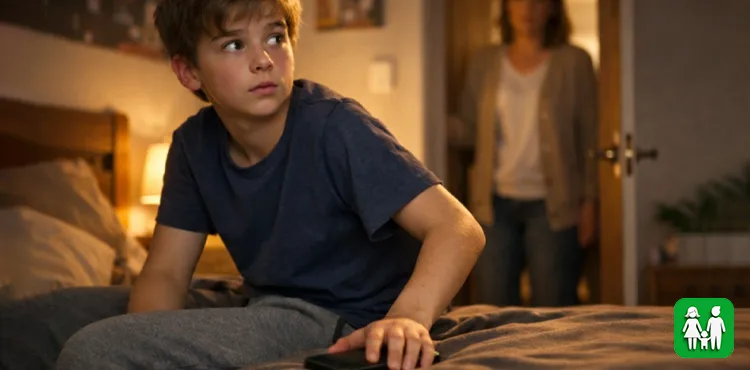
Is It Normal for a Child to Hide Their Phone?
To some extent, yes — it’s normal. As children grow older, they naturally seek more privacy. Their phone becomes part of their personal life: chats with friends, videos, games, and social media.
Sometimes a child turns their phone over simply because they don’t want their parents to:
- read their personal messages
- see jokes or memes shared by friends
- comment on every conversation
In these situations, the child is protecting their privacy. However, there are also cases when parents should pay closer attention to their child’s behavior.
When Parents Should Pay Attention
If a child quickly hides or closes their phone every time someone enters the room, it could be a sign that they are encountering something uncomfortable or risky online.
1. The Child Gets Nervous When You Are Nearby
For example, they may:
- quickly close apps
- turn the phone face down
- leave the room with their phone
Sometimes this may mean the child is chatting with strangers or simply feels worried that parents might see their conversations.
2. The Child Frequently Deletes Their History
Some children regularly clear their browser history or delete conversations. There can be many reasons for this:
- viewing inappropriate content
- participating in private chat groups
- trying to hide communication with strangers
Deleting history alone doesn’t always indicate a problem, but if it happens constantly, it may be worth discussing calmly with your child.
3. The Child Spends Too Much Time on Their Phone
Pay attention if your child:
- uses their phone late at night
- gets anxious without internet access
- reacts strongly when asked to put the phone away
This could be a sign of digital overuse or issues related to online interactions.
4. Sudden Changes in Mood
Sometimes online problems affect a child’s emotional state. For example, they might:
- become more withdrawn
- get irritated more often
- avoid conversations
Possible reasons may include conflicts in chats, peer pressure, or even cyberbullying.
What Children Usually Do on Their Phones
Many parents worry about the worst, but in reality most children use their phones for everyday activities:
- chatting with friends
- watching videos
- playing games
- using social media
However, the internet also gives access to things like adult content, anonymous chats, and communication with strangers. That’s why online safety for children is an important topic for every family.
How to Talk to Your Child About Their Phone
One common mistake parents make is starting the conversation with accusations.
Phrases like:
- “Show me your phone.”
- “What are you hiding?”
- “Let me check your messages.”
usually lead to resistance.
A calmer approach works better. For example:
“I noticed that you sometimes close your phone when I walk in. I’m not trying to control you — I just want to make sure everything is okay.”
This kind of conversation helps maintain trust instead of creating conflict.
How to Monitor Your Child’s Phone Without Conflict
Strict bans rarely work well. A better approach is to agree on clear and reasonable rules for phone use.
For example:
- no phone use late at night
- limits on social media time
- talking about suspicious messages from strangers
These agreements help maintain a healthy balance between trust and safety.
When Parental Control Tools Can Help
Sometimes it’s difficult for parents to understand what exactly is happening on their child’s phone. In these situations, parental control apps can be helpful.
They can allow parents to:
- see how much time a child spends on their phone
- set limits for certain apps
- notice potentially risky activity
It’s important to remember that these tools do not replace open conversations with children, but they can provide additional support for parents.
For example, solutions like CyberNanny help parents gently monitor their child’s digital safety and notice potential problems early.
An app is only a helper. The most important tool is you.
🌐 Website
📡 Official Telegram channel
💬 WhatsApp
⭐ We are on MAX
What Parents Should Remember
If a child turns their phone over when you enter the room, it doesn’t always mean something is wrong.
Often it simply reflects a child’s desire for personal space or normal teenage behavior.
The most important thing parents can do is stay calm, maintain trust, and help their children learn how to use the internet safely and responsibly.