
Children’s Sleep and Routine — How Smartphones Disrupt Sleep | CyberNanny
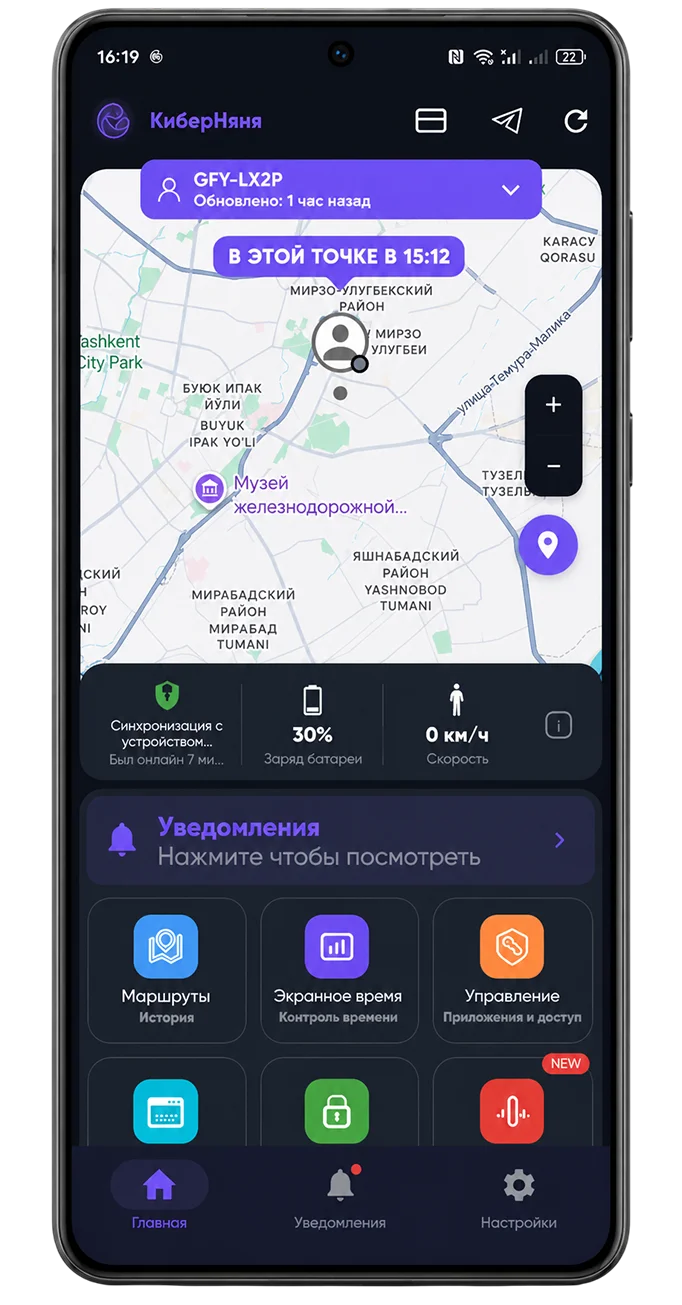
Children’s sleep and routine is the foundation of their health, school performance, and emotional well-being. Modern children sleep 1-2 hours less than the recommended amount, and one of the main reasons is smartphones and tablets in bed. According to WHO data, preschoolers should sleep 10-13 hours, schoolchildren 9-12 hours, teenagers 8-10 hours. Reality is far from these figures.
In this article we’ll cover how to establish a healthy sleep routine for your child, what signs indicate something is wrong, and how the CyberNanny app helps parents control gadget use in the evening and morning.
How much sleep does a child need — by age
- 0-3 months: 14-17 hours per day.
- 4-11 months: 12-15 hours.
- 1-2 years: 11-14 hours.
- 3-5 years (preschoolers): 10-13 hours.
- 6-13 years (schoolchildren): 9-11 hours.
- 14-17 years (teenagers): 8-10 hours.
These are recommendations from the National Sleep Foundation, aligned with WHO guidelines.
Signs of disturbed sleep routine in your child
- Difficulty waking up in the morning. The child has to be woken 5 times, gets up «like a zombie».
- Daytime drowsiness. Naps during lessons, falls asleep at 2-4 PM after school.
- Irritability and tearfulness. Bad mood without clear reason, conflicts with parents.
- Declining grades. Used to study well, now «slipped to C’s».
- Concentration problems. Cannot focus on one task, gets distracted every 2-3 minutes.
- Evening hyperactivity. Paradoxically, sleep-deprived children often become «wound up» in the evening.
- Slowed growth and development. Growth hormone is released specifically during deep sleep.
- Frequent colds. Sleep deprivation weakens the immune system.
The main enemy of children’s sleep — smartphone in bed
A teenager goes to bed at 10 PM but falls asleep at 1-2 AM. What does he do for three hours in bed? Scrolls TikTok, plays games, chats, watches YouTube. In the morning he has to get up at 7 AM — total: 5-6 hours of sleep instead of the needed 9-10.
Why phones break the routine:
- Blue light from the screen suppresses melatonin production — the sleep hormone. Falling asleep is delayed by 1-2 hours.
- Dopamine stimulation from likes, new messages, videos prevents the brain from «cooling down» before sleep.
- Night notifications. Each ping wakes the brain, even if the child doesn’t pick up the phone.
- «Just one more video» turns into hour after hour — social media algorithms specifically retain attention.
How to establish a routine — step-by-step plan
- Set bedtime by age: preschoolers 8-9 PM, schoolchildren 9:30 PM, high schoolers 10:30 PM.
- One hour before sleep — no screens. Phone, tablet, TV — turned off. This is the most important point.
- Create a «before-sleep» ritual — shower, reading a book, talking with parents. This signals the brain «time to sleep».
- Set up a «phone parking spot» in the hallway or living room. All family devices are left there at night.
- Enable «Digital Wellbeing» on Android — the screen automatically turns black-and-white after 10 PM.
- Control room light — sleep in complete darkness, without blue-light night lamps.
- Morning sunlight. Open the curtains immediately after waking, ideally go outside for 10-15 minutes.
How CyberNanny helps control the routine
The app installs on the child’s Android phone and shows the parent:
- Phone usage time. See how many hours your child actually spent on the smartphone per day.
- Activity by hour. If at 11:30 PM the child is «actively scrolling TikTok» — the parent learns about it.
- List of running apps. Which games, messengers, social networks were used and for how long each.
- «Night» alerts. If you set a schedule «shouldn’t use phone from 10 PM to 7 AM», CyberNanny sends an alert on violation.
This isn’t a restrictive function but informational. The parent sees the real picture and can discuss with the child.
What to do with a teenager who doesn’t surrender the phone in the evening
Teenage «phone battles» are a separate story. A few working tactics:
- Agreement, not ban. Discuss bedtime together, explain how sleep affects studies and sports.
- Show CyberNanny statistics. Specific numbers «6 hours screen time, 2 of them after 11 PM» — strong argument.
- Family example. If parents themselves scroll phones until 1 AM, the child won’t listen.
- Gradual restriction. Not «starting Monday no phones» — but «let’s start with phone going to the hallway at 11 PM».
- Alternatives. You can’t just take away the phone — you need to give something to replace it. Book, conversation, evening walk.
Frequently asked questions
Can I just turn on «Do Not Disturb» in the evening? This solves the notification problem but not distraction. The teenager reaches for the phone every 5 minutes «to check».
At what age should I give a child their first smartphone? Psychologists recommend not earlier than 11-12 years, and immediately with parental controls configured.
What if the child hides the phone under the pillow? Agree on a «parking spot» in the hallway. If that doesn’t work — show usage statistics from CyberNanny.
Do «sleeping pills» help? Melatonin in supplement form is debatable — always consult a pediatrician. It’s much safer to establish the routine without medication.
What about a hyperactive child who can’t fall asleep? Physical activity during the day, calm activities in the evening, screen-time control 1-2 hours before sleep.
Set up routine control through CyberNanny
Sign up at thecybernanny.com and install the app on your child’s Android phone. Within 24 hours, the dashboard will show the real picture: when the child puts the phone down, how long they use it in the morning, which apps «eat up» time.
This is the first step toward establishing a healthy sleep routine without scandals or bans — based on concrete data, not guesswork.