
How to Know Who Your Child Talks To Online — Honestly, Without Losing Trust
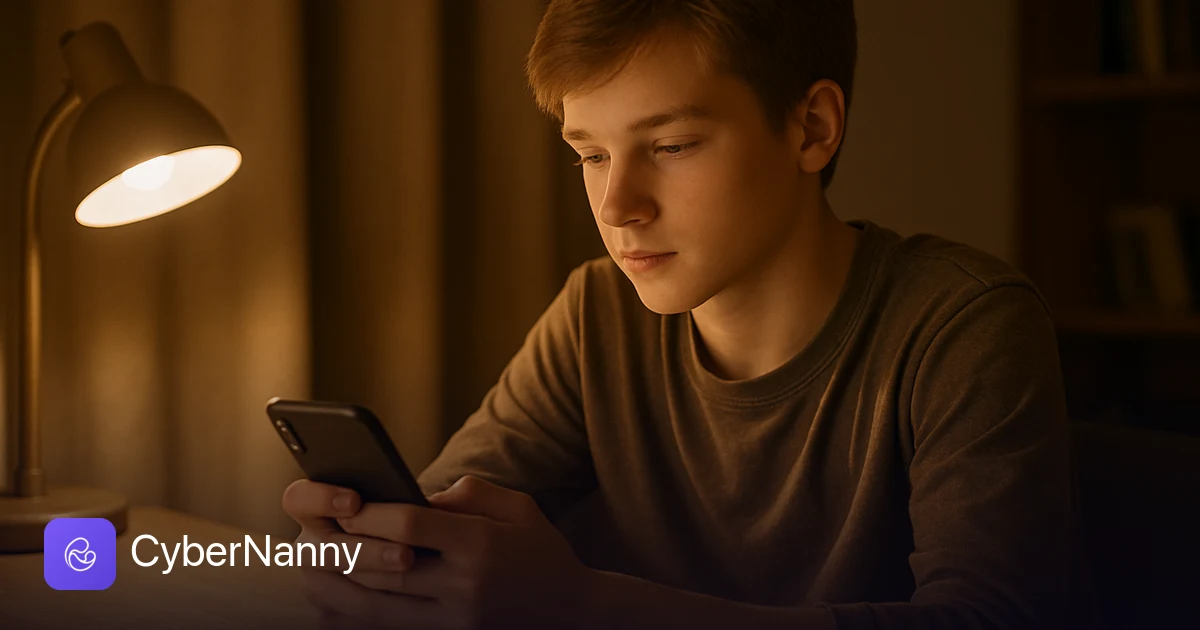
Few worries hit a parent harder than not knowing who is on the other side of your child's screen. Messengers, games, and social apps mean a stranger can reach your son or daughter in seconds — and the urge to "just check everything" is completely understandable. But there is a hard truth worth saying plainly: secretly breaking into someone's private messages is the wrong move, and quiet surveillance damages the very trust you are trying to protect. The good news is that you do not have to choose between your child's safety and your relationship with them. This guide is about your own underage child, and about a path that keeps both safety and trust intact.
- You cannot — and should not — secretly hack into anyone's private chats; this is about your own minor child, not spying on others.
- Secret surveillance breaks trust. The honest combination is an open conversation plus parental controls your child knows about.
- A parental app like CyberNanny shows messenger activity and sends AI alerts about dangerous contacts — grooming, bullying, strangers — instead of turning life into total surveillance.
- The goal is not to read every word. It is to step in when something is genuinely risky.
Why secret spying backfires
It feels efficient to install something quietly and watch from the shadows. In practice, it almost always costs more than it gives. Children — especially teens — eventually notice. And the day they do, the lesson they learn is not "my parent kept me safe." It is "my parent went behind my back, so I will hide better next time." You lose the one thing that actually protects a child over the long run: their willingness to come to you when something goes wrong.
There is also a basic ethical and legal line. You may oversee your own minor child as their parent and guardian. You may not secretly read other people's private correspondence — not your child's friends, not a partner, not anyone. The honest approach respects that line and is built on the child's awareness, not on deception.
Start with an honest conversation
Before any app, before any settings, comes a talk. This is the part many parents skip, and it is the part that matters most. The aim is not to interrogate or to deliver a list of bans. It is to make your child feel that online safety is something you handle together.
- Lead with care, not suspicion. Try "I want to help you stay safe online, not catch you doing something wrong" rather than "Show me your phone."
- Name the real risks calmly. Explain that strangers sometimes pretend to be peers, that people can pressure or bully through chats, and that anyone can hide behind a friendly avatar.
- Be clear about what you will and won't do. Tell them you will use a parental control tool, what it does, and — just as importantly — what it does not do. Honesty here is what separates protection from spying.
- Invite their input. Ask which apps they use and who they talk to. A child who helps shape the rules is far more likely to follow them.
This conversation is not a one-time event. Revisit it as your child grows and as new apps appear. Trust is maintained, not installed once.
Add parental controls — openly
An honest conversation sets the foundation; a parental control app gives you the practical visibility a single chat cannot. The key word is openly. Your child should know the tool exists, roughly what it watches, and why. Transparency is what turns a "surveillance device" into a shared safety net.
Used this way, a tool like CyberNanny shows you what your child's communication looks like across messengers, so you are not guessing in the dark. The point is not to hover over every message but to have a window into the contacts and conversations that could matter — and to be told when something looks dangerous.
How CyberNanny helps without total surveillance
The difference between healthy oversight and obsessive monitoring is focus. You do not need to read every joke, meme, and "what's up" your child exchanges. You need to know when a contact or conversation crosses into risk. CyberNanny is built around that distinction.
- Messenger visibility. CyberNanny shows your child's communication in messengers, so you can see who they talk to rather than relying on hope or guesswork.
- AI alerts for dangerous contacts. Instead of dumping endless chat logs on you, the app uses AI to flag genuinely risky situations and notify you about them.
- It targets real threats — grooming, bullying, strangers. The alerts focus on the patterns parents fear most: an adult grooming a child, peers bullying, or unknown people trying to make contact.
- It is not designed for total surveillance. The aim is to surface what matters, not to record and read everything your child does. That restraint is what keeps the tool compatible with trust.
Think of it like a smoke detector rather than a camera in every room. You are not watching constantly — you are being alerted the moment there is real smoke.
Try CyberNanny for free
See who your child talks to and get AI alerts about dangerous contacts — without turning care into secret surveillance.
Install the appFinding the right balance
Even with the best tool, the question of "how much" remains. Over-monitoring can be as harmful as under-monitoring: a child who feels watched at every moment learns to perform rather than to trust. Here is how to keep the balance ethical and age-appropriate.
- Match oversight to age. A nine-year-old taking their first steps in messengers needs closer guidance than a sixteen-year-old who has earned more independence. Loosen the reins as trust is proven.
- Respond to alerts, not to everything. Let the AI alerts do the filtering. If nothing is flagged, resist the urge to scroll through ordinary conversations.
- Talk about what you see. If an alert raises a real concern, bring it up with care and curiosity, not accusation. "I noticed something that worried me — can we talk about it?" keeps the door open.
- Keep the tool transparent over time. Don't let an openly installed app quietly become a secret one. If your child asks what it does, answer honestly.
The measure of success is not how much you can see. It is whether your child still comes to you first when a stranger gets pushy or a friend turns cruel.
A simple, honest plan
- Have the conversation first. Frame safety as a shared goal and explain the tool before installing it.
- Set up parental controls openly. Install CyberNanny with your child's awareness; tell them what it watches and why.
- Rely on AI alerts. Let the app surface grooming, bullying, and stranger risks instead of reading every message.
- Act with care. When something is flagged, respond as a supportive parent, not an investigator.
- Revisit and adjust. Update rules and oversight as your child matures and earns trust.
Knowing who your child talks to does not require betraying them. It requires honesty, the right focus, and a tool that alerts you to real danger while leaving everyday life private. That is how you protect your child and keep the relationship that makes protection possible.
Frequently asked questions
Can I secretly read my child's messages to keep them safe?
No — and it's the wrong approach even when it's technically your own minor child. Secretly hacking into private correspondence is unethical, and quiet surveillance destroys trust. The honest path is an open conversation combined with parental controls your child knows about.
Won't my child resent any monitoring at all?
Resentment usually comes from secrecy, not from oversight itself. When you explain why you're using a tool, what it does, and what it doesn't do, monitoring becomes a shared safety measure rather than spying. Children are far more accepting of controls they were told about honestly.
Does CyberNanny let me read every single message my child sends?
CyberNanny is not designed for total surveillance. It shows your child's communication in messengers and uses AI to alert you about dangerous contacts — grooming, bullying, and strangers — so you can focus on real risks instead of reading every ordinary conversation.
What kinds of dangers will the app actually warn me about?
The AI alerts focus on the threats parents worry about most: adults attempting to groom a child, bullying from peers, and unknown people trying to make contact. The idea is to surface genuinely risky situations rather than flood you with everyday chatter.
How do I keep oversight from becoming too much?
Match it to your child's age, respond to alerts rather than scrolling through everything, and keep talking openly. As your child demonstrates good judgment, loosen the reins. The goal is a child who still comes to you when something goes wrong — not one who has learned to hide better.