
AI Alerts: Know About Grooming and Bullying Before It Is Too Late
The hardest sentence in every parent's account of grooming or bullying is the same: "I was the last to know." Not because the parent was inattentive — because the child stayed silent. About bullying out of shame, about the adult "friend" because he asked them not to tell, about a scam because admitting it is frightening.
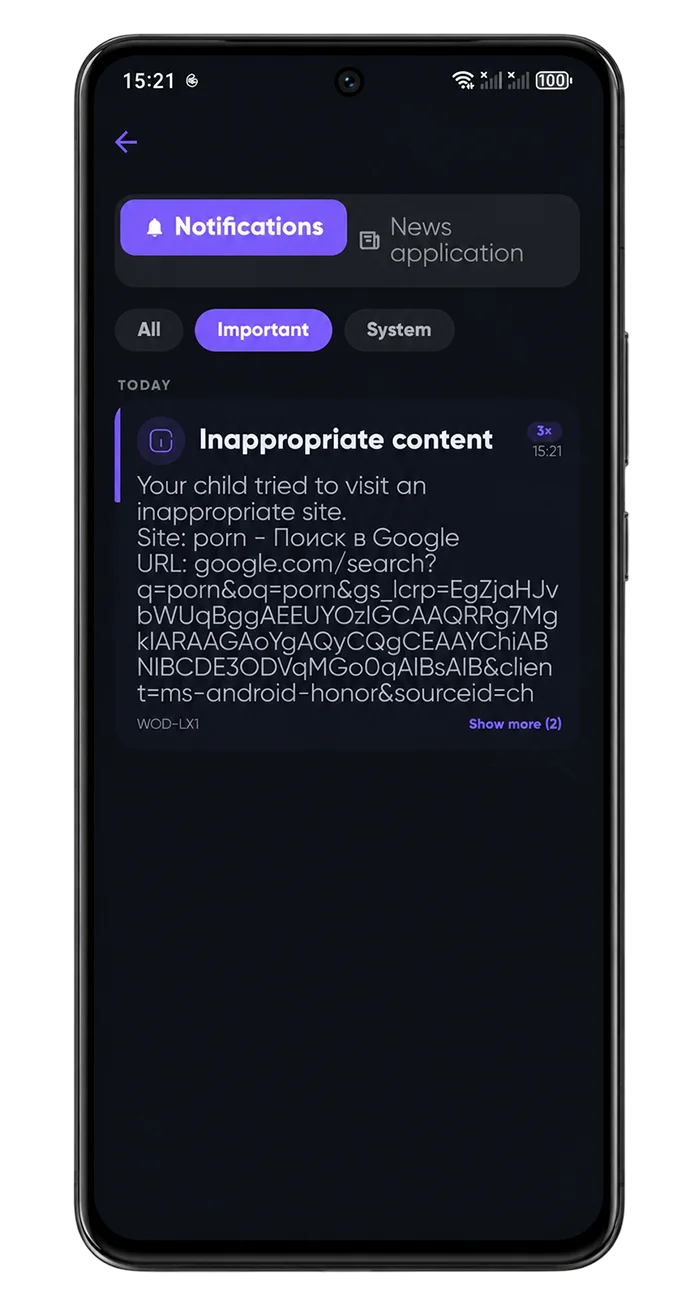
AI alerts exist to close exactly that gap: the system analyses conversations itself and notifies you when something looks wrong.
- AI flags dangerous conversations instead of making you read everything.
- It recognises grooming, bullying, scammers, dangerous challenges and signs of distress.
- Alerts usually arrive within 5–15 minutes, with an explanation of what triggered them.
- False positives are dismissed with one tap and the system adapts.
- The first alert of each month comes with full details on the free plan.
What the AI recognises
- Grooming. An adult building trust: questions about family and school, support when parents "do not understand", a shared secret, then a suggestion to meet. No single message looks dangerous — the sequence does, and that is what the algorithm sees. More in grooming warning signs.
- Bullying. Systematic insults in a group chat, exclusion, threats, image sharing — the thing children almost never report. See bullying signs and how to help.
- Scammers. Hacked-friend requests, fake in-game currency giveaways, urgent money demands.
- Dangerous challenges and the communities pushing them.
- Signals about your child — language that may indicate depression or self-harm.
How it separates real risk from teenage humour
Teenagers joke harshly, and reading messages literally would produce a flood of false alarms. So the algorithm weighs context, not isolated words.
"I'll kill you" in a friend group chat after a lost match is ordinary teenage speech and produces nothing. The same line from an unfamiliar adult account three days into a conversation is a different matter entirely.
Every alert can be marked as irrelevant, and the system adapts to how your family actually talks.
What to do when an alert arrives
- Do not act on impulse. Read the context first: who, how long, what triggered it.
- Do not open with "I saw everything." Open with interest: "Tell me, who is this messaging you? I don't know them."
- If it is grooming, preserve the conversation. Screenshots matter if you report it; block and report the account in the messenger.
- If it is bullying, start with your child and the school rather than the other parents.
- Ask the AI Advisor how to frame the conversation for your child's age — see the AI Advisor.
Try CyberNanny for free
The first full-detail alert each month is free. PRO unmasks all of them.
Get the appFAQ
Does the AI read all of my child's messages?
Analysis runs automatically without human involvement, message content is not stored in models or used for training, and you are shown what the system considered concerning rather than everything.
How fast do alerts arrive?
Usually within 5–15 minutes. Direct threats and attempts to arrange a meeting with a stranger are prioritised.
What if an alert is wrong?
Dismiss it as irrelevant with one tap — the system learns from those marks.
Do AI alerts work on iPhone?
Message analysis needs access iOS does not grant to third-party apps, so alerts work fully on Android.
Does my child know the AI reads their chats?
Yes. The app does not hide itself, and we recommend saying it plainly: the system looks for danger, it is not there to read chats with friends.