
Control or Surveillance: How to Keep Your Child's Trust
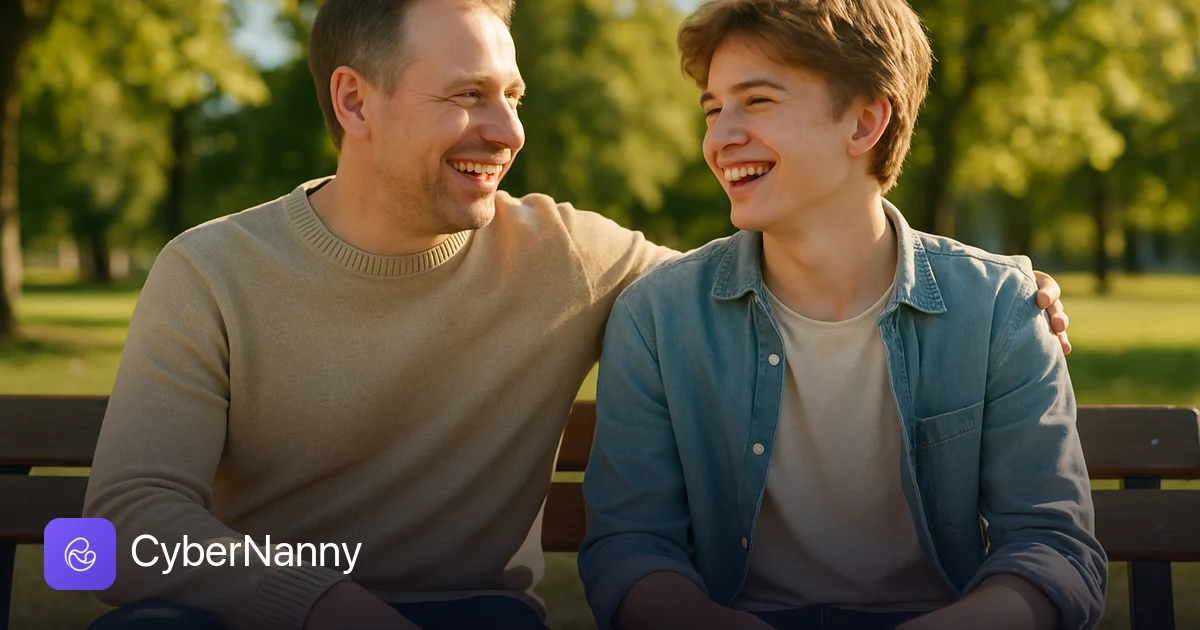
Every parent who installs a monitoring app eventually faces the same uncomfortable question: am I protecting my child, or am I spying on them? It's a fair worry. The same tools that block a predator's message or flag a dangerous app can also feel, from a child's point of view, like a parent reading their diary over their shoulder. The difference between healthy care and corrosive surveillance isn't really about the software you choose — it's about how you use it and whether your child knows it's there. This guide walks through where that line sits, why secret monitoring tends to backfire, and how to set up controls that actually strengthen the relationship instead of quietly eroding it.
- Monitoring works better when your child knows about it — openness changes behavior more than secrecy ever will.
- The goal is safety, not suspicion. Frame controls around protection, not distrust.
- Transparency builds a stronger relationship than covert tracking, which collapses the moment it's discovered.
- Loosen the reins as kids grow. The level of control that fits a 7-year-old will feel like a cage to a 15-year-old.
Where the line between care and surveillance sits
Care and surveillance can use identical technology, so the boundary isn't technical — it's about intent, consent, and proportion. Care is protective and openly acknowledged: your child knows the safety net exists, understands roughly what it does, and sees it as something working for them. Surveillance is covert and suspicion-driven: it's hidden, open-ended, and aimed at catching the child out rather than keeping them safe.
A useful test is to ask three questions before turning on any feature:
- Does my child know this exists? If you'd be embarrassed for them to find it, that's a signal you've drifted into surveillance.
- Is it proportionate to a real risk? Knowing which apps a 9-year-old installs is proportionate. Reading every private message a trusted 16-year-old sends usually isn't.
- Does it have an endpoint? Care evolves and steps back over time. Surveillance tends to expand indefinitely.
Concretely, things that fall comfortably on the "care" side include filtering adult content, getting an alert if your child leaves a safe zone, capping screen time on school nights, and seeing whether a brand-new contact has started messaging a young child. Things that drift toward surveillance: secretly reading a teenager's private chats with friends, tracking their exact location minute by minute with no reason, or logging keystrokes to catch them in a lie. The first set protects against external threats. The second polices the child themselves — and that's where trust starts to break.
Why secret control backfires
Hidden monitoring feels efficient — no arguments, no pushback, complete visibility. In practice it carries a hidden cost that almost always comes due. The core problem is that secrets get discovered. Kids are often more tech-literate than their parents assume; they notice battery drain, a strange app icon, or a parent who somehow knows about a conversation they never mentioned. And when they find out, the damage isn't to the rule — it's to the relationship.
Discovery typically triggers a predictable chain. First comes betrayal: "You didn't trust me, so why should I trust you?" Then comes evasion. A child who learns they're secretly watched doesn't usually stop the risky behavior — they move it somewhere you can't see. They borrow a friend's phone, create a second account, use a school device, or switch to apps you've never heard of. You've now lost both the visibility and the trust, which is the worst of both worlds.
There's a deeper issue too. Secret surveillance teaches the wrong lesson about relationships and privacy. A child who grows up being covertly watched learns that love and control are the same thing, that being monitored without consent is normal, and that the way to handle conflict is to hide rather than to talk. Those lessons follow them into adult friendships and romantic relationships. Open monitoring teaches the opposite: that safety and respect can coexist, and that you can keep someone safe without treating them as a suspect.
How to agree on controls with your child
The single most powerful move you can make is to turn monitoring from something you do to your child into something you set up with them. That starts with a conversation, not an installation.
- Lead with the "why." Children accept rules they understand far more readily than rules handed down by decree. Explain the actual risks in age-appropriate terms: strangers who pretend to be kids, scams, content that's upsetting or addictive by design. Make it clear the tool guards against those threats — it isn't there because you expect them to misbehave.
- Decide the rules together. Ask what feels fair to them. How much screen time on a weekend? Which apps are okay? When you involve a child in writing the rules, they become co-authors rather than prisoners, and they're far more likely to follow agreements they helped create.
- Be specific about what the tool does — and doesn't — do. Tell them plainly: "I'll be able to see how long you spend in apps and get an alert if you leave school grounds. I'm not going to sit and read your messages with your friends." Naming the limits is what makes the deal trustworthy.
- Promise — and practice — stepping back. Frame controls as a starting point that loosens as trust is demonstrated. "Right now we'll keep it on this setting. In a few months, if things go well, we'll relax it." This gives your child a reason to cooperate and a path toward more freedom.
One practical script for younger kids: "The internet has some great stuff and some genuinely dangerous stuff, and you can't always tell which is which yet — that's not your fault, it's designed to fool people. This app is like a seatbelt. You still drive; it's just there in case something goes wrong." For teens, lean harder into respect: "I'm not trying to read your life. I just want to know you're safe and to step in if something serious happens. Tell me what feels reasonable to you."
Parental controls by age
There is no single correct setting, because the job of parenting shifts from protection in early childhood to coaching in adolescence. Your controls should track that shift.
Preschoolers (roughly 3–6). At this age, control is total and entirely uncontroversial — and it should be. Young children can't assess risk, so you make every decision: which apps and videos they can open, strict time limits, no open internet, no chat features at all. The emphasis is on a tightly walled garden of pre-approved content and co-viewing whenever possible. There's no privacy expectation to violate yet; the child simply uses devices alongside you. The habit to build here is your own: get comfortable with the tools while the stakes are low.
Younger school-age children (roughly 7–11). This is the crucial transition. Kids start using devices more independently, encounter messaging and games with social features, and develop a budding sense of privacy. Controls stay fairly firm — content filtering, screen-time limits, an eye on new contacts and newly installed apps, location safe zones for the walk to and from school. But the difference from the preschool stage is that you now explain everything and start handing over small decisions: let them help pick which games are allowed, or negotiate weekend screen time. This is the age to establish the open, talk-about-it culture that will carry you through the teen years. Reading every message is still defensible for an 8-year-old; by 11 it's worth narrowing your view to safety signals rather than reading routine chatter.
Teenagers (roughly 12–17). The goal here is to raise an independent adult, and heavy-handed surveillance directly undermines that. Teens need genuine privacy to develop identity, friendships, and judgment. Pull back to a safety-net model: rough location for peace of mind, alerts for serious red flags (signs of grooming, self-harm content, contact from much older strangers), and conversations about screen habits rather than hard caps you impose unilaterally. Resist the urge to read private messages with friends — for most teens that's the bright line between a parent who cares and one who spies. Replace surveillance with dialogue: regular, low-pressure check-ins about what they're seeing online do more than any dashboard. By the later teen years, much of the "control" should ideally be self-control you've spent years coaching them toward.
What not to do
- Don't install anything in secret on a child old enough to have a reasonable expectation of privacy. The short-term visibility isn't worth the long-term rupture.
- Don't use monitoring data as "gotcha" ammunition. If every glance at the app ends in an interrogation, your child learns that openness gets punished — and they'll route around you.
- Don't read private conversations just because you can. Capability isn't permission. Reserve deep access for genuine, specific safety concerns, not idle curiosity.
- Don't let the app replace the relationship. A dashboard tells you what happened, never why. No notification substitutes for actually talking.
- Don't keep controls frozen as your child grows. The same settings that protected a 7-year-old will feel insulting to a 14-year-old and provoke exactly the rebellion you feared.
- Don't weaponize it during conflict. Cutting off access or tightening surveillance as punishment in an unrelated argument poisons the tool's purpose.
Advice from a psychologist's perspective
Child psychologists tend to agree on a few principles that cut through the control-versus-trust debate. First, trust is built in small, repeated deposits. Every time you honor the limits you promised — not reading the chats you said you wouldn't, relaxing a rule you said you'd relax — you make a deposit. Children keep a remarkably accurate ledger of whether parents keep their word.
Second, autonomy is a developmental need, not a reward. Adolescents are biologically driven to seek independence; fighting that with surveillance creates pressure that finds release in secrecy. Channeling it — giving graduated, age-appropriate freedom — produces a teen who comes to you before a problem rather than hiding it until it explodes.
Third, the quality of your conversations predicts your child's safety far better than the depth of your monitoring. A child who believes they can tell you about a frightening message without being blamed or having their phone confiscated is dramatically safer than one whose every move is tracked but who would never confide in you. Aim to be the person your child runs toward in a crisis. Finally, model the behavior you want: respect their privacy in small daily ways — knock before entering, ask before sharing their photos online — so that "I respect your boundaries" is something you demonstrate, not just claim.
Try CyberNanny for free
Keep your child safe online with transparent, age-appropriate controls you can set up together — not behind their back.
Install the appFrequently asked questions
Should I tell my child I'm using a monitoring app?
In almost all cases, yes — especially for school-age children and teens. Openness is what makes monitoring effective rather than just temporarily informative. When children know the safety net exists and understand why, they tend to behave more responsibly, and you avoid the trust collapse that follows a secret being discovered. The rare exception is an acute, serious safety crisis (signs of grooming, exploitation, or self-harm), where short-term discreet monitoring may be justified while you get professional help.
Isn't openly telling them just an invitation to find workarounds?
Some kids will test limits either way, but the research and clinical consensus point the other way: secrecy drives evasion more reliably than transparency does. A child who trusts that you're being straight with them, and who has a realistic path to more freedom, has far less motivation to route around you. And when you monitor openly, you can have honest conversations about workarounds instead of playing an escalating game of hide-and-seek.
At what age should I stop reading my child's messages?
There's no universal date, but a good rule of thumb is to scale back from reading routine conversations somewhere around ages 11–13, shifting from reading everything to watching for genuine safety signals. By the mid-teens, reading private chats with friends should generally stop unless there's a specific, serious concern. Replace it with regular conversation — that's both more respectful and, by the teen years, more protective.
My teenager says any monitoring at all is a violation of trust. How do I respond?
Acknowledge the feeling and reframe the purpose. Make clear you're not policing their friendships or reading their private life — you're keeping a light safety net for genuine emergencies, much like knowing they'll text when they arrive somewhere. Invite them to help define what's reasonable. Teens who co-design the rules and see you respect the limits almost always come around, because the conversation itself demonstrates the respect they were worried they'd lost.
How do I rebuild trust if my child found out I was monitoring secretly?
Start by owning it honestly: acknowledge that doing it secretly was a mistake, and explain the fear that drove you without excusing the method. Then renegotiate openly — show them exactly what the tool does, agree together on limits, and commit to no more surprises. Trust rebuilds through consistency over time, so the most important thing is to keep every promise you make from that point forward. It's slower than you'd like, but transparency is the only path back.