
Cyberbullying: How to Spot It and Help Your Child
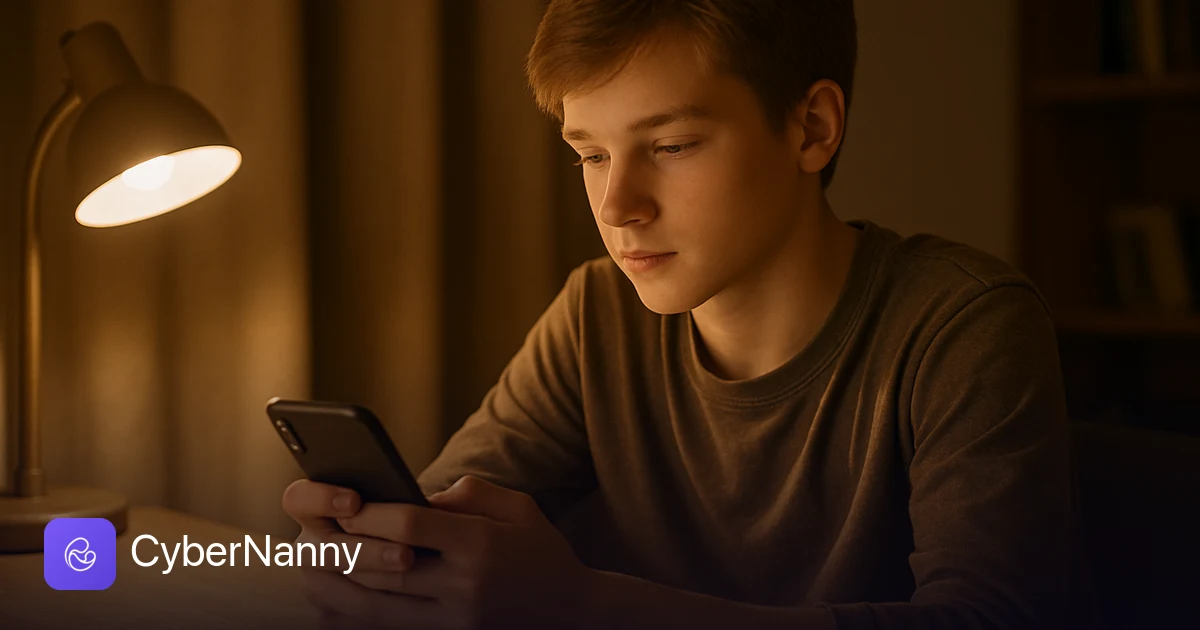
For most kids today, online life and "real" life are the same life. Friendships, jokes, group chats, gaming squads, crushes, homework help — it all lives on a screen. That closeness has a dark side: when conflict or cruelty starts, your child can't simply walk away from it the way you could once close a classroom door. Cyberbullying follows them home, into their bedroom, onto the pillow they fall asleep next to their phone on.
The hardest part for parents is that it's often silent. There's no black eye, no torn jacket, no note home from a teacher. The wound is invisible, and many kids hide it on purpose — out of shame, out of fear the phone will be taken away, or out of the belief that adults "won't get it." This guide will help you understand what cyberbullying actually is, recognize the early signs, respond in a way that helps instead of backfires, and use tools that let you notice trouble before it spirals.
- Cyberbullying is repeated, intentional harm delivered through digital channels — messages, posts, images, exclusion, or impersonation.
- Watch for sudden mood changes around the phone, secrecy, sleep and appetite shifts, avoidance of school, and a drop in self-esteem.
- It happens most on messengers, social platforms, games, and anonymous apps — often in group chats and comments.
- Help by staying calm, listening without judgment, saving evidence, and blocking/reporting together — never by confiscating the device as punishment.
- Monitoring tools like CyberNanny help you spot warning signs early and start the conversation before things escalate.
What is cyberbullying
Cyberbullying is the use of digital technology — phones, apps, games, and social networks — to repeatedly and deliberately hurt, threaten, humiliate, or exclude another person. The key words are repeated and deliberate. A single rude comment in a heated moment is a conflict; a pattern of targeting is bullying.
It takes many forms, and most kids experience more than one at the same time:
- Harassment: a stream of mean, threatening, or insulting messages, sometimes from several people at once.
- Exclusion: deliberately leaving a child out of group chats, game lobbies, or events — and making sure they know it.
- Outing and doxxing: sharing private messages, secrets, photos, or personal information without consent.
- Impersonation: creating fake profiles or hacking an account to post embarrassing content "as" the victim.
- Public shaming: humiliating memes, edited photos, comment pile-ons, and "hate" pages.
- Trolling and flaming: provoking and attacking a child in comments or live chats, often anonymously.
What makes the digital version uniquely painful is its reach and permanence. A humiliating screenshot can be shared with the entire school in minutes, it never truly disappears, and the attacker can hide behind anonymity. There's no safe place — the bullying continues at midnight, on weekends, on vacation. For a child whose sense of belonging is tied to their peers, that feeling of being inescapably exposed is overwhelming.
Age matters here. Younger children (8–11) most often face cruelty inside games and on kid-focused platforms — being kicked from lobbies, mocked for how they play, or sent mean messages. Tweens and teens (12–16) face the more sophisticated and emotionally charged forms: rumors, exclusion from social circles, leaked private content, and reputation attacks tied to appearance, identity, or relationships.
Signs your child is being bullied online
No single sign proves cyberbullying, but a cluster of changes — especially ones that appear or worsen around device use — should put you on alert. Watch for:
- Emotional shifts tied to the phone: becoming anxious, angry, sad, or withdrawn during or right after using a device, then hiding the screen.
- Sudden secrecy: quickly closing apps when you walk in, changing passwords, deleting accounts, or guarding the phone far more than usual.
- The opposite — avoidance: some kids suddenly stop using the phone or a favorite app entirely, dreading what's there.
- Sleep and appetite changes: trouble sleeping, nightmares, checking the phone at night, eating much more or much less.
- School reluctance: faking illness, dropping grades, or refusing to go where the bullies also are in person.
- Withdrawal from friends and activities: pulling away from hobbies, sports, or a social group they used to love.
- Low self-esteem and dark talk: calling themselves stupid, ugly, or worthless; in serious cases, talk of hopelessness or self-harm.
- Unexplained physical complaints: frequent headaches, stomachaches, or fatigue with no medical cause.
- Jumpiness at notifications: flinching, dread, or visible distress when a message arrives.
Trust the pattern, not a single bad day. If your normally chatty child goes quiet, your gamer stops gaming, or your social butterfly stops wanting to leave the house — and it lines up with screen time — it's worth a gentle conversation.
Where it happens
Cyberbullying thrives wherever kids gather online, and it tends to move to whichever platform parents are watching least. The most common arenas:
- Messengers and group chats: WhatsApp, Telegram, and Snapchat are frequent hotspots. Group chats are powerful because exclusion, pile-ons, and "remove from group" moments are instant and public to peers. Disappearing messages make it harder to prove.
- Social platforms: Instagram, TikTok, and YouTube comments host public shaming, hateful comments, and edited photos or videos. Stories and "close friends" lists become tools for exclusion.
- Online games: Roblox, Minecraft, Fortnite, and similar games have voice and text chat where younger kids especially face insults, threats, griefing, and being ganged up on.
- Anonymous and Q&A apps: apps that let users send "anonymous" questions or messages are notorious for cruelty, because the sender feels untouchable.
- School-adjacent spaces: shared class chats, collaborative documents, and even comments on schoolwork can be misused.
One important nuance: the bully is usually not a stranger. In most cases it's a classmate, a former friend, or someone from the child's wider social circle. That's exactly why kids stay silent — telling an adult feels like it could blow up their daily life at school.
How to help your child
If you suspect or confirm cyberbullying, your reaction in the first conversation shapes whether your child keeps trusting you. Move slowly and lead with support.
- Stay calm and regulate yourself first. Your child is watching to see if telling you makes things better or worse. Panic, anger, or "I knew that app was a problem" shuts them down. Take a breath before you respond.
- Listen and validate. Let them tell the whole story without interrupting or jumping to solutions. Say things like "That sounds really painful," "I'm so glad you told me," and "This is not your fault." Being believed is half the relief.
- Reassure them they won't lose their phone. Fear of confiscation is the number-one reason kids hide bullying. Make clear that you're a team and the device isn't being taken as a punishment for something done to them.
- Save the evidence. Before anyone blocks or deletes, take screenshots of messages, posts, comments, usernames, dates, and links. This matters for reporting to platforms and, if needed, to the school or authorities.
- Block and report together. Walk through blocking the bully and using the app's report function side by side. Doing it together restores a sense of control and teaches a lasting skill.
- Loop in the school. If the people involved are classmates, contact the school calmly with your evidence. Most schools have anti-bullying policies and an obligation to act, even when the harm happens off-campus.
- Get extra support if needed. If you see talk of self-harm, deep withdrawal, or symptoms that don't ease, involve a counselor, pediatrician, or mental-health professional. You don't have to handle the emotional fallout alone.
- Rebuild confidence. Reconnect your child with offline activities, friends, and hobbies where they feel competent and valued. Healing happens when their world gets bigger than the screen the bullying lived on.
What not to do
Good intentions can still backfire. Avoid these common mistakes:
- Don't confiscate the device as a reaction. It punishes the victim, cuts them off from supportive friends, and guarantees they won't tell you next time.
- Don't minimize it. "Just ignore them," "It's only online," or "Toughen up" tells your child their pain doesn't count — so they'll stop sharing it.
- Don't tell them to retaliate. Fighting back online usually escalates the conflict and can make your child look like the aggressor in screenshots.
- Don't contact the other child or their parents in anger. Confronting them directly often inflames the situation. Go through the school or platform instead.
- Don't take over and shut them out of decisions. Act with your child, not over their head. Springing actions on them destroys trust and their sense of control.
- Don't delete the evidence in a rush to "make it stop." You'll need it for reports and follow-up.
- Don't blame your child. Questions like "What did you do to provoke this?" land as betrayal. No one deserves to be bullied.
How monitoring (CyberNanny) helps spot it early
The biggest obstacle for parents is the silence. By the time a child finally says something, the bullying has often been going on for weeks. This is where thoughtful monitoring closes the gap — not by spying, but by giving you the early signals you'd otherwise miss.
CyberNanny is designed to help parents notice trouble in time and start the right conversation:
- Message and chat awareness: CyberNanny gives visibility into messengers and social apps where bullying hides, so a wave of hostile messages or sudden exclusion doesn't stay invisible for weeks.
- App and activity overview: see which apps your child uses and how much, so you can notice if they suddenly avoid a once-favorite app or spend anxious hours in one chat.
- Keyword and alert signals: get notified about concerning language so you can check in before a bad night becomes a crisis.
- Context for a calm conversation: instead of a vague "Is everything okay?", you can approach gently and at the right moment, having noticed a real change.
The goal of monitoring isn't to catch your child doing something wrong — it's to make sure they're not silently carrying something heavy alone. Used openly and age-appropriately, with a conversation about why it's there, monitoring becomes a safety net rather than surveillance. For younger children it's a natural part of guided online life; for teens, transparency and respect for growing privacy keep trust intact while you still get the early warnings that matter.
Try CyberNanny for free
Spot the early signs of cyberbullying and stay close to your child's digital life — calmly, openly, and in time.
Install the appFrequently asked questions
How is cyberbullying different from a normal kids' argument?
A normal argument is usually a one-time clash between people of roughly equal standing, and it ends. Cyberbullying is repeated, intentional, and involves an imbalance of power — one child or group deliberately targeting another over time. If your child feels cornered, helpless, and unable to escape it, treat it as bullying, not a spat.
My child won't talk about it. What can I do?
Don't force a confession. Keep showing up: spend low-pressure time together, share a story about your own childhood, and make small, repeated openings like "I'm always on your side, no matter what." Reassure them you won't take the phone away or overreact. Sometimes it's easier for kids to open up to a counselor or another trusted adult first — that's a win, not a failure on your part.
Should I confront the bully or their parents directly?
It's tempting, but direct confrontation usually escalates things and can put your child in a worse position. The safer route is to document everything, report through the app's tools, and work with the school, which has both policies and authority to intervene. Reserve direct outside contact for situations involving threats or illegal content, where authorities should be involved.
Is monitoring my child's phone an invasion of their privacy?
It depends on how you do it. Secret surveillance can damage trust, but open, age-appropriate monitoring — where your child knows it exists and understands it's about safety — is widely seen as responsible parenting, especially for younger kids. With teens, be transparent, explain the "why," and respect growing autonomy. The aim is to keep them safe, not to catch them out.
When should I involve the police or other authorities?
Escalate beyond the school and platforms when there are credible threats of violence, sexual content or exploitation, stalking, doxxing, or persistent harassment that won't stop. Save all evidence and contact local authorities or a dedicated child-safety hotline. If your child expresses thoughts of self-harm, seek professional help immediately.