
Is Talking Tom Safe for Kids? The Spying Myth, Debunked
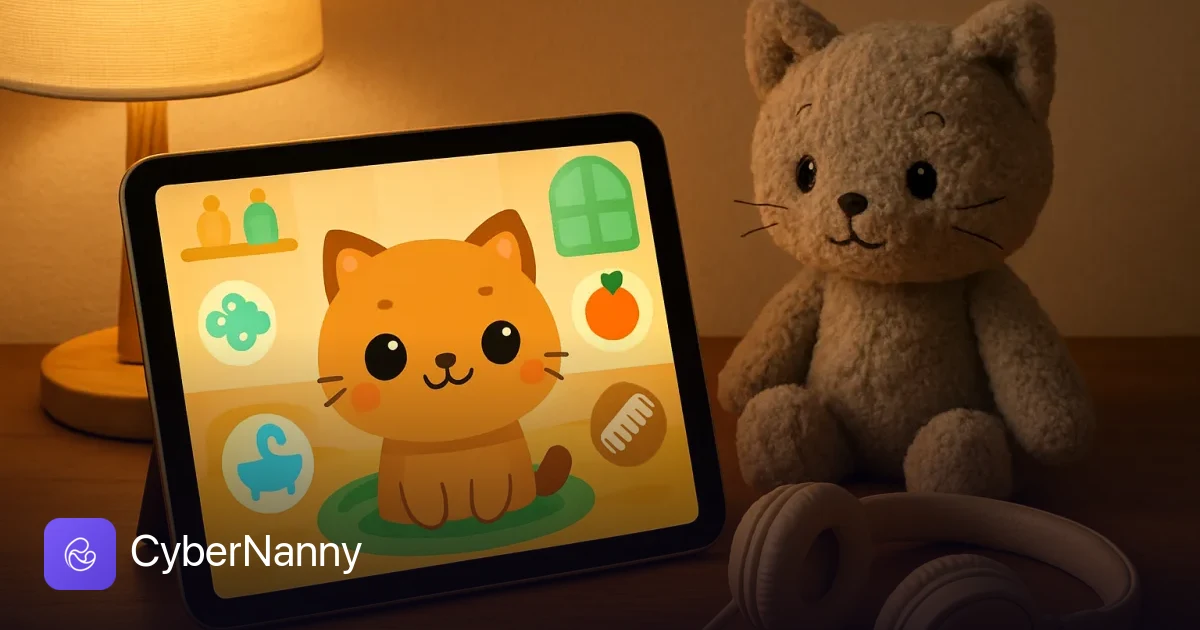
Talking Tom has been the digital pet of choice for toddlers and preschoolers for over a decade — which is why so many parents still search is Talking Tom safe before handing over the tablet. The short answer: yes, Talking Tom is mostly safe for young kids, with two real caveats (ads and in-app purchases) and one famous myth we should retire for good: no, the cat is not spying on your family.
The "Talking Tom listens to your conversations" scare has circulated in chain messages and social posts for years. It sounds plausible — the app does ask for microphone access — so it keeps resurfacing every school year. Below we will unpack what that permission is actually for, what the genuine concerns are, and how to set the app up so a four-year-old can play without draining your card or watching junk ads.
- Content-wise Talking Tom is safe for young children: no violence, no chat with strangers, no scary content.
- The "Talking Tom spies on you" story is a debunked hoax — the microphone permission powers the repeat-your-voice gimmick, the app's core trick.
- The genuine issues are heavy advertising in the free version (occasionally with age-inappropriate ads from third-party networks) and constant nudges toward in-app purchases.
- The developer has faced regulator and watchdog scrutiny over ads and data practices in kids' apps in the past — a reason for sensible settings, not for panic.
- Our recommendation: fine from about age 4 with ads tamed (offline play or paid version), purchases locked and a daily time limit — CyberNanny handles the time side automatically.
What Talking Tom is and why kids love it
Talking Tom (and the wider My Talking Tom / Talking Tom Friends family from developer Outfit7) is a virtual-pet app: you feed the cat, dress him, tickle him, and — the star feature — say something out loud so he repeats it in a squeaky voice. There is no online multiplayer, no chat, no user-generated content. For the core audience of 3–7-year-olds, that already removes the scariest categories of risk that haunt games like Stumble Guys or Roblox.
The "Talking Tom is spying" myth, debunked honestly
The rumor claims the app records your conversations and sends them to criminals or shadowy third parties. Here is the boring truth: Talking Tom asks for microphone access because repeating your voice is literally the point of the app. The audio is processed to play back the squeaky version; security researchers who have examined the apps found no evidence of covert surveillance, and the story has been debunked repeatedly by fact-checkers over the years.
A fair nuance for accuracy: like most free kids' apps, older versions collected analytics and advertising data, and regulators and consumer watchdogs in several countries have raised claims against the developer over advertising practices and data collection in children's apps. That scrutiny led to changes and is worth knowing about — but it is a very different thing from "the cat records your kitchen conversations". If a permission still makes you uneasy, you can simply deny microphone access: the app works, your child just loses the repeat-voice trick.
The real concerns: ads and in-app purchases
Advertising
The free version of Talking Tom is ad-heavy: banners, interstitials between activities, and rewarded videos ("watch an ad to get coins"). Ads come from third-party networks that rotate constantly, and over the years parents have occasionally reported age-inappropriate ads slipping through to very young players. It happens rarely, but with a preschooler on the screen, "rarely" is still worth engineering away.
In-app purchases
Coins, diamonds, outfits, food, potions — the game constantly dangles things to buy, and small children genuinely do not understand that the shiny button costs real money. App-store news archives are full of stories about four-figure accidental spending sprees in kids' games. The fix takes two minutes: a purchase PIN on your store account.
How to make Talking Tom actually kid-safe
| Measure | What it solves | Effort |
|---|---|---|
| Play offline (airplane mode / Wi-Fi off) | Removes virtually all ads instantly | None — works today |
| Store purchase PIN (Google Play / App Store) | No accidental coin or diamond purchases | 2 minutes, once |
| Paid ad-free version or subscription | Removes third-party ads at the source | Small ongoing cost |
| CyberNanny screen-time limits | Daily limit and schedule for the app, activity feed, app blocking when the day's quota is done | 10-minute setup on the child's Android device |
The offline trick deserves emphasis: Talking Tom plays perfectly well without internet, and without internet there are no ads. For a preschooler's tablet, that alone solves 80% of the problem. Add a purchase PIN and a daily limit enforced by the settings from our full Talking Tom parental control guide, and the app becomes about as safe as mobile games get.
Verdict by age
- 3–4: fine for short, supervised sessions — ideally offline and with purchases locked.
- 5–7: the core audience. Safe with ads tamed and a daily time limit, since the feed-and-reward loop is deliberately habit-forming.
- 8+: no safety concerns at all; most kids simply outgrow it — often moving on to social games where the questions get harder, like Avatar World or online multiplayer titles.
One honest limitation to note: on an Android device you can control apps and screen time in full; on a child's iPhone, any third-party tool is constrained by the system, so combine Apple's Screen Time with whatever applies to your setup.
Try CyberNanny for free
Set a daily limit for Talking Tom, block games when the quota is done and see what your child's device is up to — without hovering over their shoulder.
Install the appFree forever: map, messengers, calls. Plus 7 days of full PRO when you first link a device.FAQ
Is Talking Tom spying on you?
No. The long-running "spying" story is a hoax. The microphone permission exists so the cat can repeat your child's voice — the app's core feature — and researchers and fact-checkers have found no evidence of covert recording. If you prefer, deny the microphone permission and the app still works.
Why does Talking Tom ask for microphone access?
To hear what your child says and play it back in a squeaky voice. That is the app's signature trick. Without the permission, everything else — feeding, dressing, mini-games — works normally.
Is Talking Tom OK for a 4 year old?
Yes, with setup: play offline to remove ads, set a purchase PIN on the store account, and cap session length. The content itself is gentle and made for preschoolers.
How do I stop the ads in Talking Tom?
Two reliable options: play with the internet off (ads simply cannot load), or pay for the ad-free version. Content filters do not help here because ads come from rotating third-party networks.
Does Talking Tom cost money?
The base game is free with ads and optional in-app purchases of coins, diamonds and outfits. A child cannot spend anything if store purchases require your PIN — set that up before the first play session.